How do you know everyone knows what they need to know?

Training is not done because it was held. It is done when you can still see afterwards who completed it, who didn't, what they know — and when they must prove it again.

Three mandatory trainings today. A competency matrix tomorrow. The same system.

How deep shall we go?

Same system. Three depths.

surface. If you only have a few minutes mid-depth. The essentials, with practical examples deep dive. If you want to see what's behind it

Five simple questions

  • Has everyone completed the mandatory training?
  • Did they pass the exam?
  • Who may work in this role or on this machine tomorrow?
  • Whose qualification is about to expire?
  • If someone asks tomorrow, can we prove it?

If the answers have to be pieced together from spreadsheets, emails and paper, the hard part is not the training itself. It is keeping track of it.

The life of a training

  1. We assign it

    By role too, so there are no name lists to maintain. Whoever moves into a new role gets what belongs to it.

  2. They complete it

    Where and when they can. On one screen, no training needed.

  3. They take an exam or show it

    With an online test, or in practice — where the trainer confirms it.

  4. We see it is done

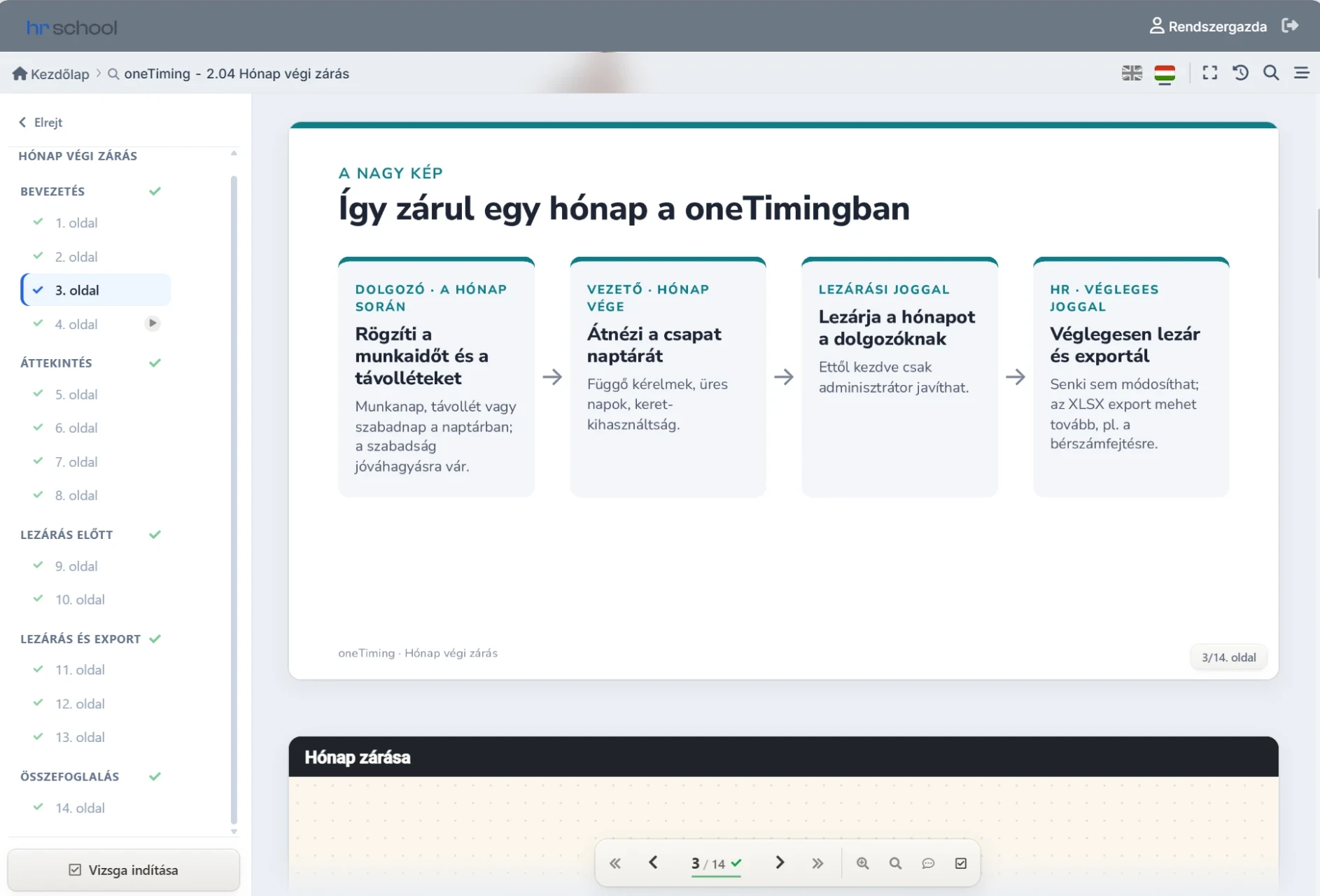
    Completion and expiry are visible together. No need to look anything up.

  5. When it expires, it starts again

    The system warns in advance, not afterwards.

Online, classroom or hands-on training — the point is the same: it must be visible who needs to know what, whether they have done it, and how long it is valid. No separate register for every format.

What a manager sees

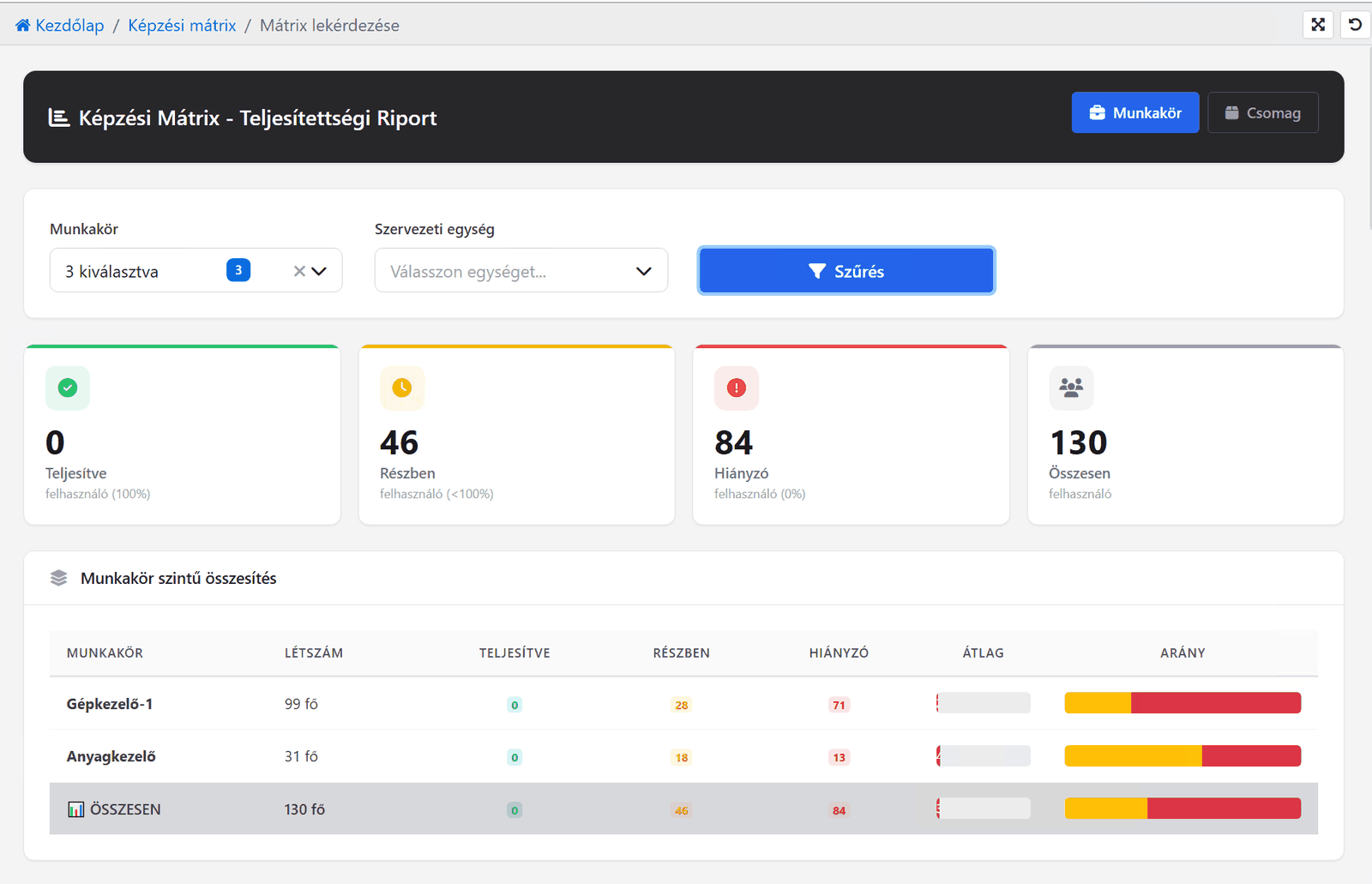
Completion report: where mandatory training stands, per role.
Who is up to date. Who has fallen behind. What expires soon.

No need to ask around.

From simple course material to a full training system

Today: three mandatory trainings, a few exams and a list of expiry dates.

Tomorrow: classroom training, practical checks or a competency matrix per role.

The same system.

2002 the first live rollout — straight away at a bank of 2,000 people
25 years in use every working day since
3,000,000+ online exams completed

Since then we have been refining the same problem: how to make training simple for the person who takes it — and provable for the person responsible for it.

The question isn't whether it was held. It's whether we know who knows.

If you'd like to see more, the Overview shows the whole process.

Overview

Rather talk to us? Contact →